HAWK Signal - How did we get here?
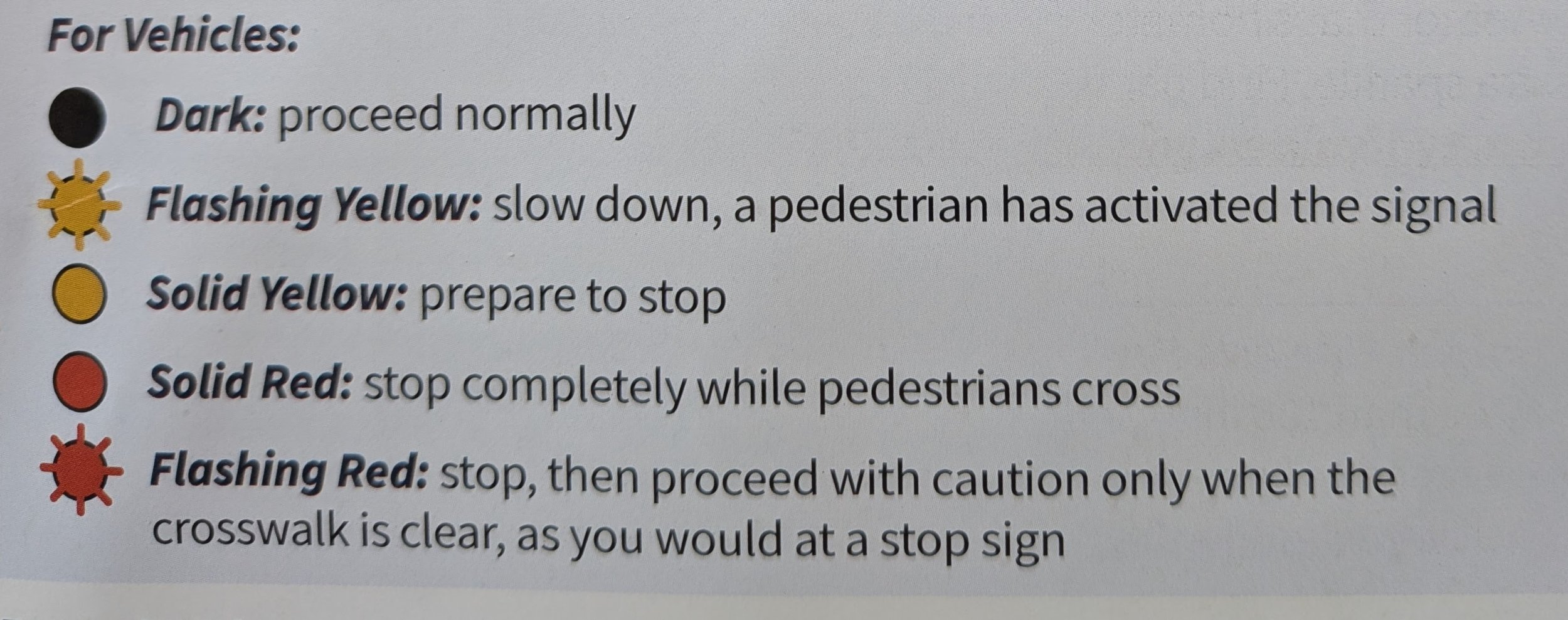
The signal, and what the lights mean. Scroll down to read the blog post.
The HAWK signal is a pedestrian activated full traffic signal located between Elm and Illinois on 19th street in Golden. This is not an official history, nor exhaustive, but more of a brain dump on the HAWK signal and what I knew and some speculations about why there is no tunnel or bridge.
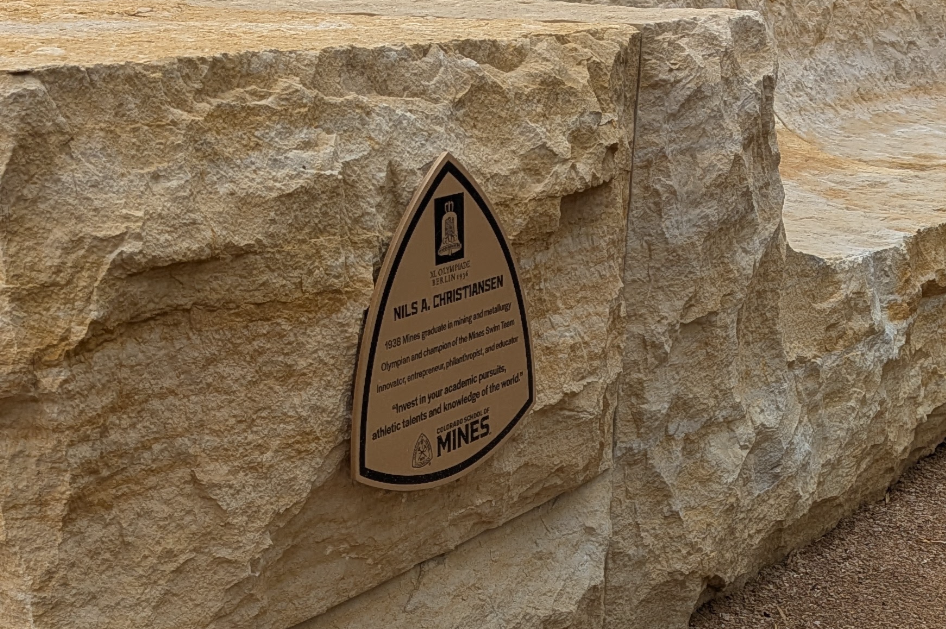
Something like 10 years ago I saw a presentation by the architect of Mines, Chris K., who showed the Nils Christensen property as being owned by and built out by Mines for a dorm, or maybe a conference center. You know the property, it was a house and adobe structure at the SW corner of 19th and Illinois.
I pushed back and said it was inappropriate to show that since it was still owned by his widow. The plans were briefly changed, but still, there were people pushing to not have Mines expand beyond their then boundary, which they were doing already (crossing Washington, 1750 Jackson, 1600 Jackson….). But certainly people have been aware of the challenges of getting students, either commuters, or residents, across 19th to attend class.
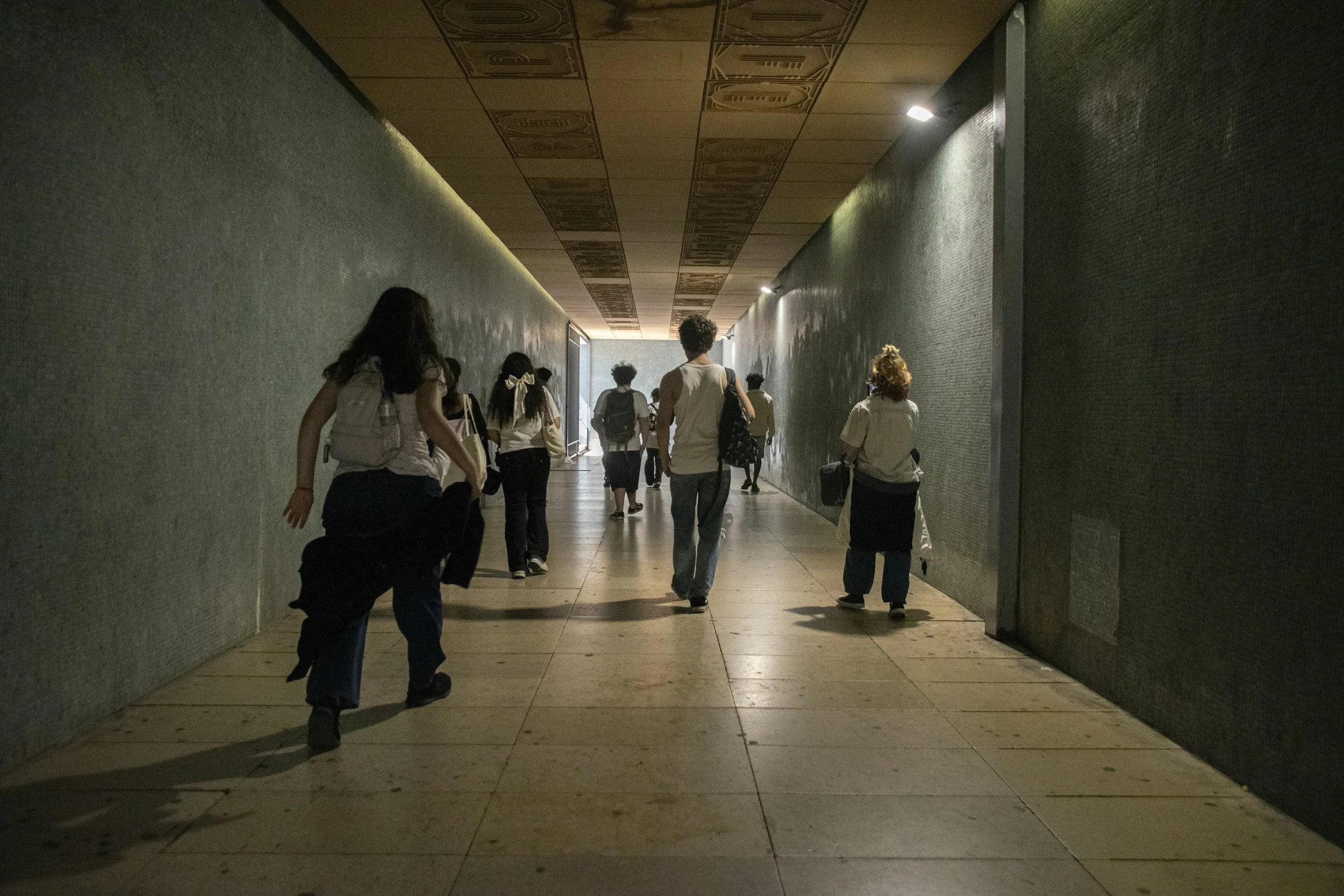
Clearly a tunnel would be the way to go, right? Once you build it, there is low maintenance and you can use it in all weather. Among the issues you need to deal with are, getting people down to the tunnel, getting them back up, and having utilities either go below, or above the tunnel. If the utilities go below, do you have to literally pump sewage up hill to rejoin existing pipes? If they go above, how deep is your tunnel? Not an easy issue to solve. Let’s say you go “shallow” and move utilities somehow and ignore the challenges. A reasonable tunnel width with traffic both ways, including bikes, is 14 feet minimum, with 10 foot ceilings minimum, because any smaller and people feel claustrophobia and will not use it. With 10 foot ceilings then, you probably have to go down a minimum of 15 feet. At a 3% grade, that requires 500 feet to go down, and 500 feet to come up. At a 5% grade you can shorten that to 300 feet, on EACH side. Add to that a flair at the end to make it welcoming (people just don’t like entering tunnels, really), and you can readily see that a tunnel requires a lot of distance, well over 1000 feet. Make some hard choices and get it down to 600 feet and a shorter tunnel! Okay, but the distance from one building, across the street to the other is at most 200 feet from what I measure off Jmap and making some educated guesses. So, have students enter and exit at a basement level on both ends? Perhaps, but then elevators are involved, or stairs, or both, or very long internal ramps which remove any functional space for real basement needs. AND, would you want to go into a basement to use a tunnel? Think of the tunnels at DIA or ORD (Chicago). Huge, inviting, well lit, looong, you get the idea. To get people to use a tunnel frequently takes a lot of engineering to deal with the psychology of closed spaces.
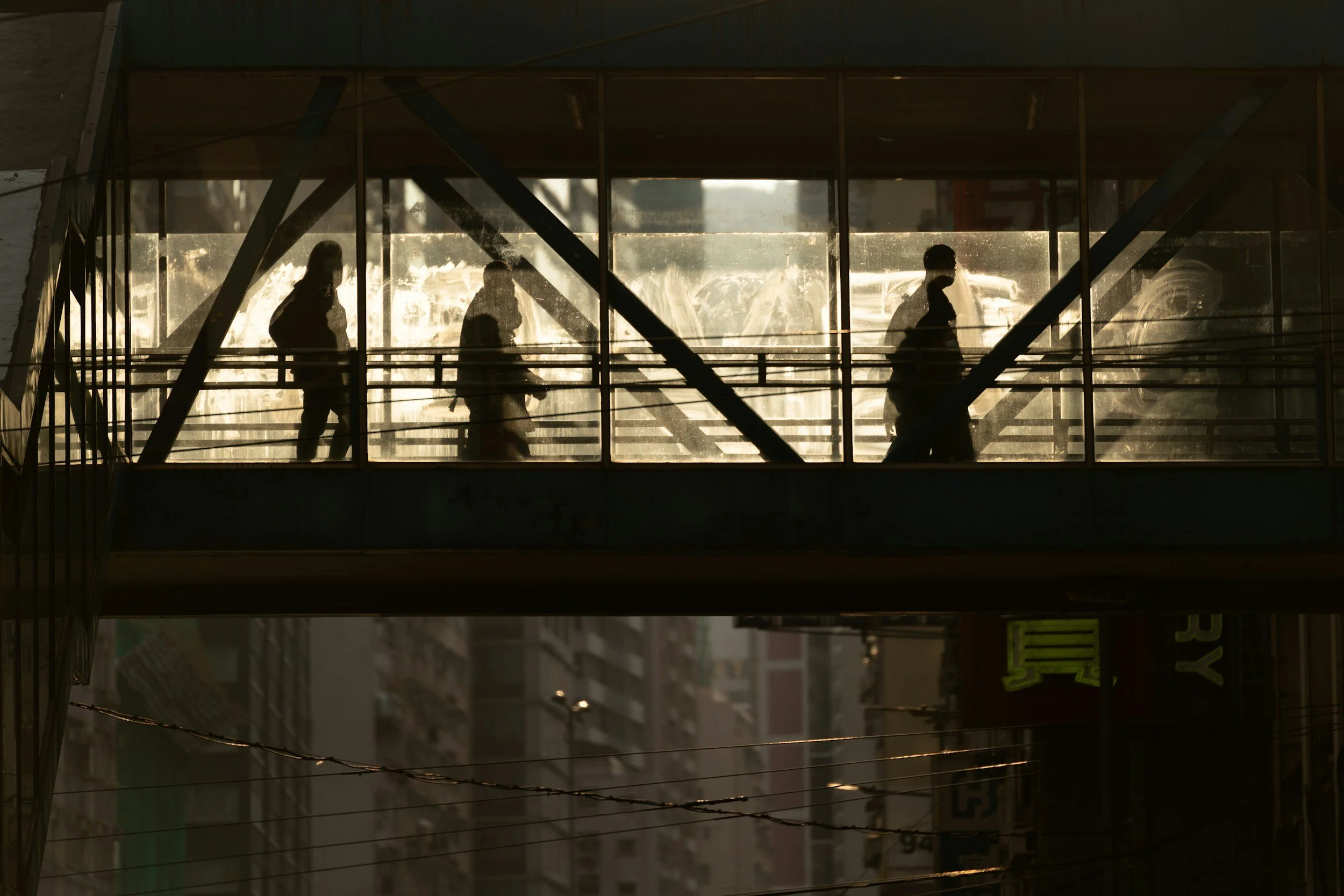
Of course a bridge has none of those downsides, why couldn’t we get Mines to build a bridge? Let’s deal with people getting to and from the bridge. Either long ramps (see tunnel issue), or stairs, or both to get up from street level is needed. Or let’s say you go from the second floor of the dorm to the second floor across the street. That use of a residential floor, for that amount of foot traffic (the whole building) would make much of the North side of the building uninhabitable, resulting in fewer beds available. I’m not sure of the uses on the north side, but it would also take away functional uses. There is also the psychology of students having a quick meal before class (on the first floor), returning to the second floor and crossing the bridge. Perhaps with grade changes a bridge could be built from the first floor of the sophomore dorm, where there is a cafeteria, up and over 19th. But getting back down quickly, or not destroying the use on the north side building would be a challenge too. I’m sure the city pushed to have a bridge, I know I mentioned it, but the money was not there. And these problems may seem solvable with more money, but each challenge rai$es the cost.
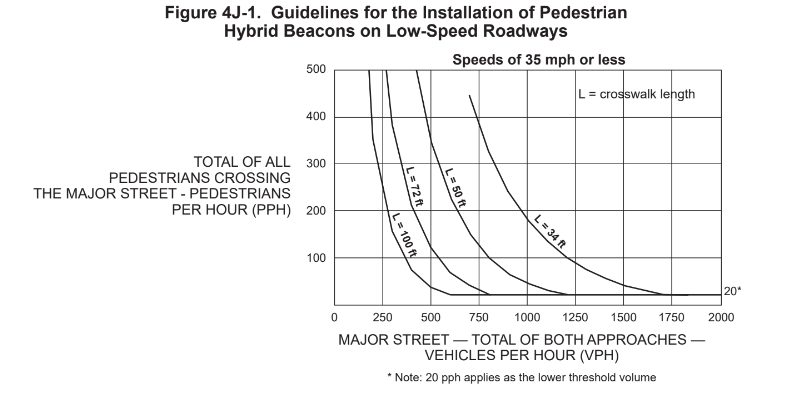
From the Manual for Uniform Traffic Control Devices (MUTCD) comes this graph with pedestrian crossing lengths (the curves) versus pedestrian crossings per hour versus vehicles per hour (both directions). You can readily see that a crossing 72 feet long (our ROW is 66 feet) is justified to have a hybrid beacon (a.k.a. HAWK signal), if there are more than 200 pedestrians and about 400 cars an hour. (Or more cars and fewer pedestrians or vice versa). The “design space” for those engineers out there means anything to the right of the curve warrants such a device. The design manual is very, very clear about how to make use of such a device, the timing allowed, and the signals for both drivers and pedestrians. I can NOT tell you why there is no green “go” arrow or light, and only the lack of two red lights to indicate cars should proceed. It is frustrating, but that is the case. So, to stay within federal and state law, and minimize the liability of doing something well-intended but not in the official design manual, we have the signal we have for better or worse. I actually don’t know the pedestrian or traffic flows in this area, but can reasonably assume they exceed these values readily. Our city traffic engineer, certified to make use of this manual, has no latitude to change the design, nor does the city have latitude to change the design, nor does Mines. What we can and must do, is make the best use of it. When installed it was not working up to standard and changes in the control box were made to get it to work according to the code, which it now does (early September, 2026).
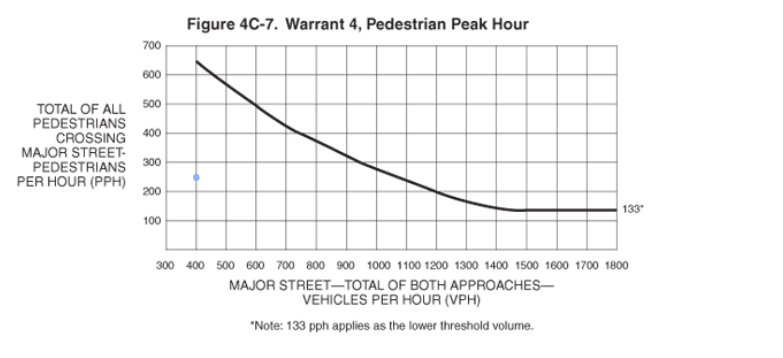
So, why not just a regular crossing pedestrian signal? The above graph shows, it seems for any major street, width unknown, that many more pedestrians and vehicles are needed to justify a control device like this. And in the text of the manual it specifically precludes their use near another controlled intersection as we have at Illinois and 19th. I put a blue dot on the graph at 250 pedestrians and 400 vehicles an hour, which DID drive warrants for a HAWK signal, but clearly does NOT drive warrants for a traffic light. So, the right control device was selected.
I am in no way happy with where we are. But I also love what Epictetus taught about the "dichotomy of control," stating that life divides strictly into things you can control and things you cannot control. I cannot control what Mines does. I have ensured that the city has done everything it can, within the legally required guidelines, to have the HAWK signal work as intended. That is in my control. What is not in my control are all the other issues that compound the problem. Start times for classes overlapping start times for GHS and Bell Middle School. A new, confusing signal with no green “go”. Those things and many more are NOT in my control.
Mines owes the city of Golden a campus wide traffic study to include pedestrian flows. Such a study will shed light on the success, or failure of crossings at Mines Park and 19th street near Illinois. When that report is out, I will try to remember to share it with my readers and perhaps it will lead to changes to traffic flows that ameliorate issues. But until then, I’m going to try to control what I can. And that includes spending only so much emotional energy on HAWK. I hope you do too.